Your Website Is Leaking Conversions — And It’s Not What You Think

What if you sit down, open your laptop, and check your analytics to find huuuuundreds of visitors landing on your site… but barely any inquiries coming through?
You’ve invested in beautiful design. Ok that’s a great start
You’ve got traffic showing up. Definitely what we want to see, high five for that!
BUT when it comes to actual conversions — the bookings, the sales, the “yes I want to work with you” messages — it’s just… crickets.
The leak isn’t where you think it is.
I’ve been doing this long enough that I can bet it’s not your pricing. It’s not your service offering. And honestly? It’s probably not even your design (but we can look over that later).
The problem is that your website looks amazing but isn’t actually guiding anyone to take action.
And that gap? That’s costing you real money.
The Disconnect: Beautiful Doesn’t Necessarily Mean Profitable.
I honestly get so excited when I see a gorgeously designed website. The colors are on point, the layout is clean, the photos are chef’s kiss. But then I start clicking around and… nothing is happening.
There’s no momentum. No clarity. No sense of “oh, this is exactly what I need.”
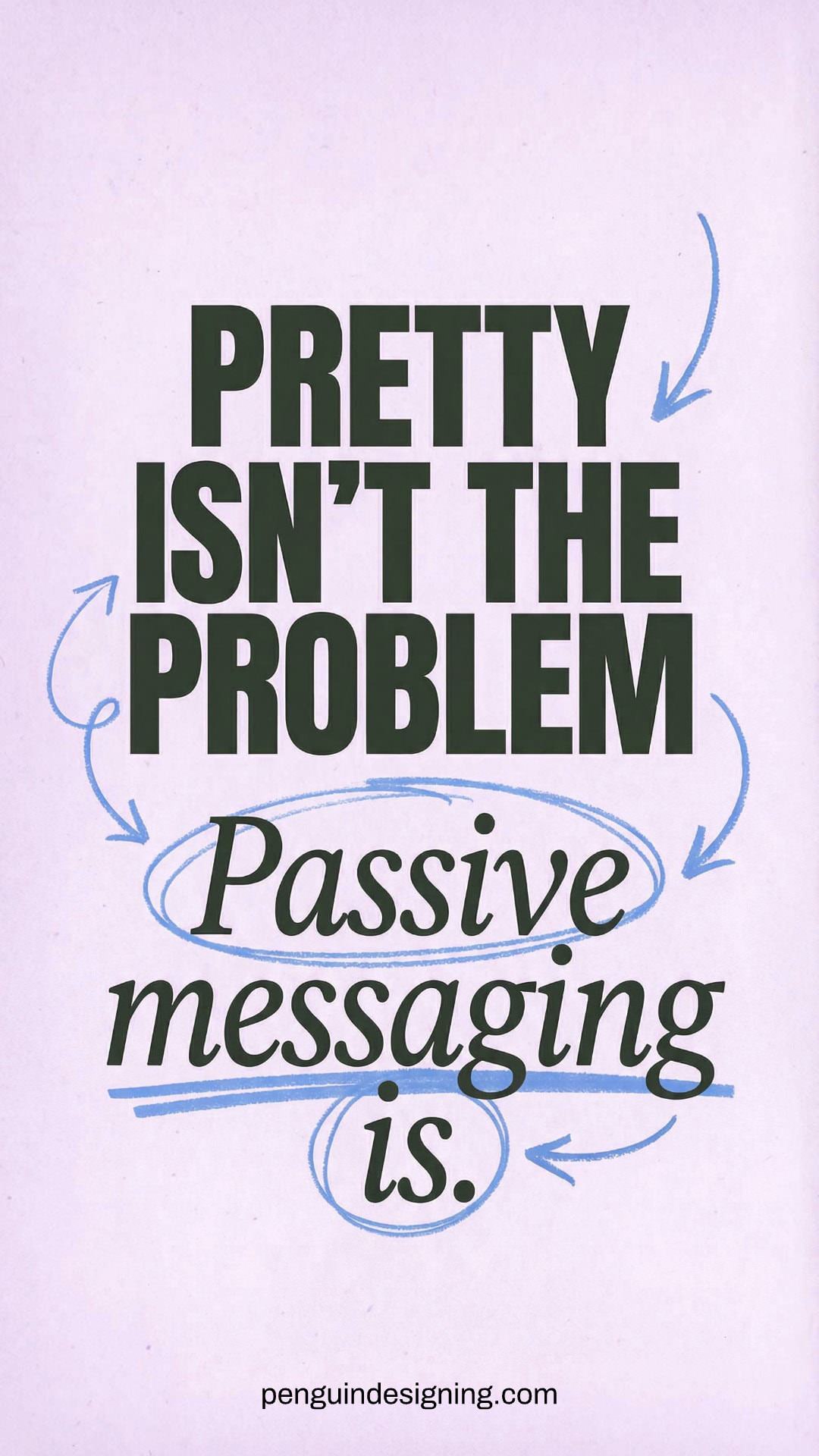
Here’s the reality check: pretty isn’t the problem — passive messaging is.
Your brain makes buying decisions in predictable patterns.
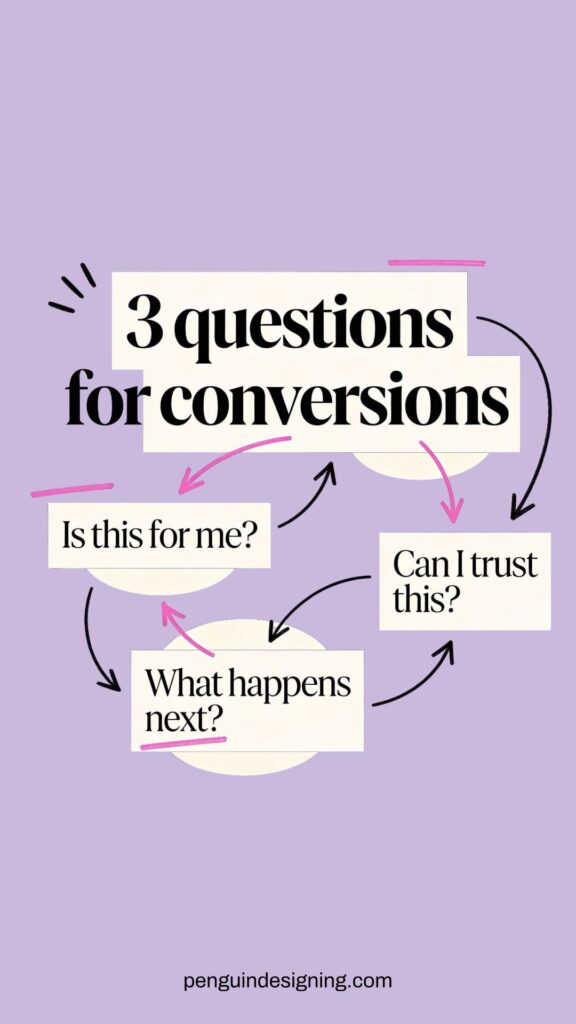
It’s constantly scanning for answers to three core questions:
- Is this for me?
- Can I trust this?
- What happens next?
When your website doesn’t answer these questions clearly and fast, visitors just bounce.
They might think your work is beautiful, but they’re not compelled to act.
Consider what happens when someone lands on your homepage and sees copy like “We create elevated experiences” or “Helping you live your best life.”
Your brain has to work to figure out what that actually means! And the moment the brain has to work too hard? It checks out.
This essentially comes down to one thing: your website is either supporting conversion or quietly sabotaging it.
Where Websites Tend to Leak Conversions.
So where are these leaks happening? Let me break this down the way I see it.
Most websites leak in three critical places, and I call this my Pre/During/Post framework (aka my PDP Experience Loop).
This is how I look at every single client project, every audit, every site I touch.
Pre-Sale Leaks
This is everything that happens before someone decides to buy, book, or reach out.
If your pre-sale experience is leaking, visitors:
- Never feel ready to take the next step
- Don’t understand what makes you different
- Can’t tell if you’re the right fit for them
- Feel confused about what you actually offer
During-Sale Leaks
This is the checkout experience, the inquiry process, the actual moment of conversion.
If your during-sale experience is leaking, people:
- Hit friction points that make them second-guess
- Face too many decisions (hello, decision fatigue)
- Don’t see strategic upsells or next-step offers
- Abandon the process entirely because it feels clunky
Post-Sale Leaks
This is what happens after someone buys or books — and this is where most businesses completely drop the ball.
If your post-sale experience is leaking:
- The momentum dies immediately
- There’s no bridge to the next offer or touchpoint
- Customers feel like the relationship just… stopped
- You’re starting from scratch every time you want to sell again
Client Example: The TIQUE Transformation.
Let me give you a real example of how fixing these leaks increased conversions for one of my clients.
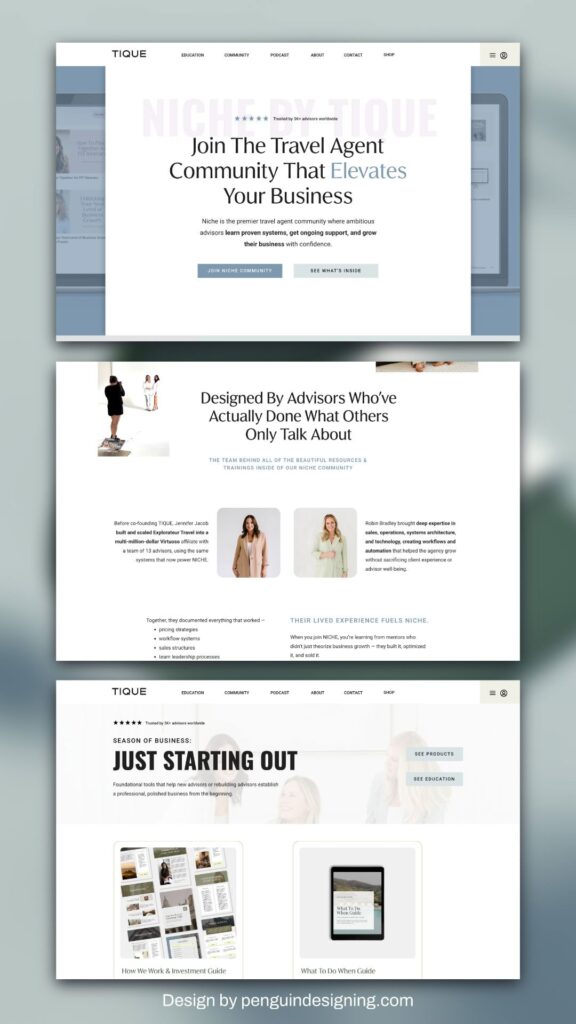
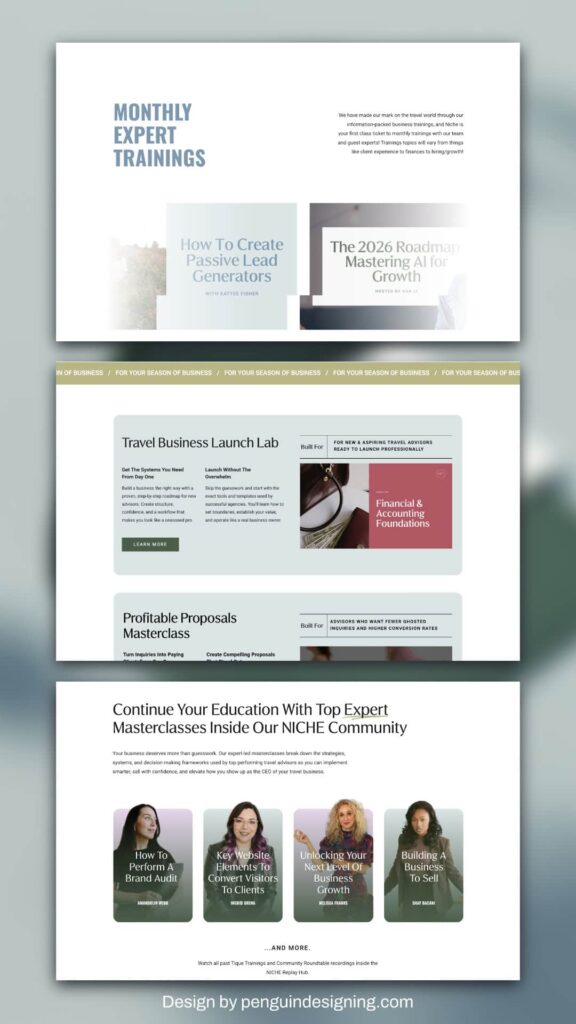
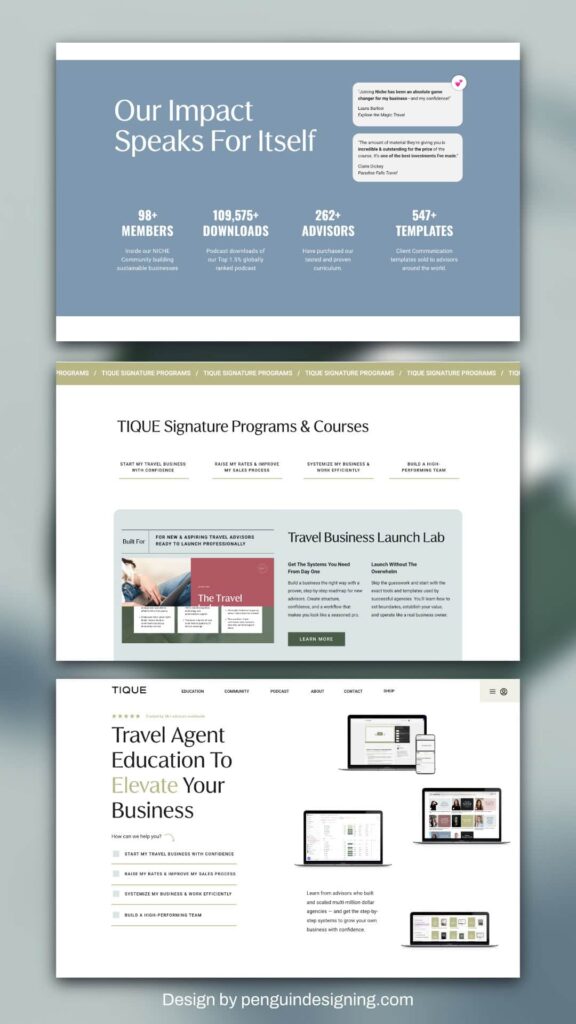
TIQUE came to me with a beautiful brand. Their aesthetic was stunning. But their website wasn’t gonna serve them much longer the way they needed it to since they were evolving from just service providers to a full-gear education platform.
We went through their entire Pre/During/Post flow in my signature brand and website experience:
Pre-Sale: We clarified their messaging and positioning during the Brand Strategy phase so visitors immediately understood what they were buying and why it mattered. No more vague language — we got specific about the transformation and who we are talking to (and we had 4 very distinct personas!).
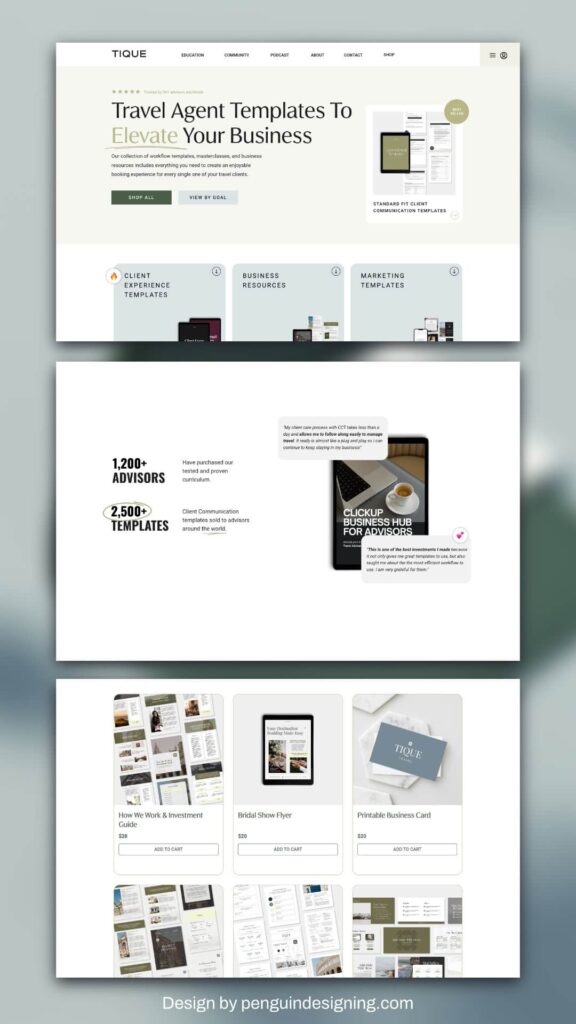
During-Sale: We optimized their shop and checkout flow, reduced decision fatigue, and added strategic bump offers that felt helpful (not pushy!). We also made sure the visual hierarchy guided people naturally toward the “add to cart” button.
Post-Sale: We created the opportunity for post-purchase touchpoints that immediately validated their decision, delivered value, and started building anticipation for what’s next.
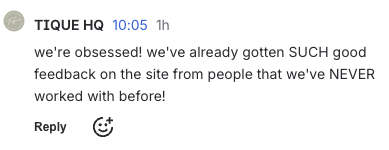
Their ROI was through the roof. We’re talking high double-digit percentage increases in gross and total sales, aka conversions.
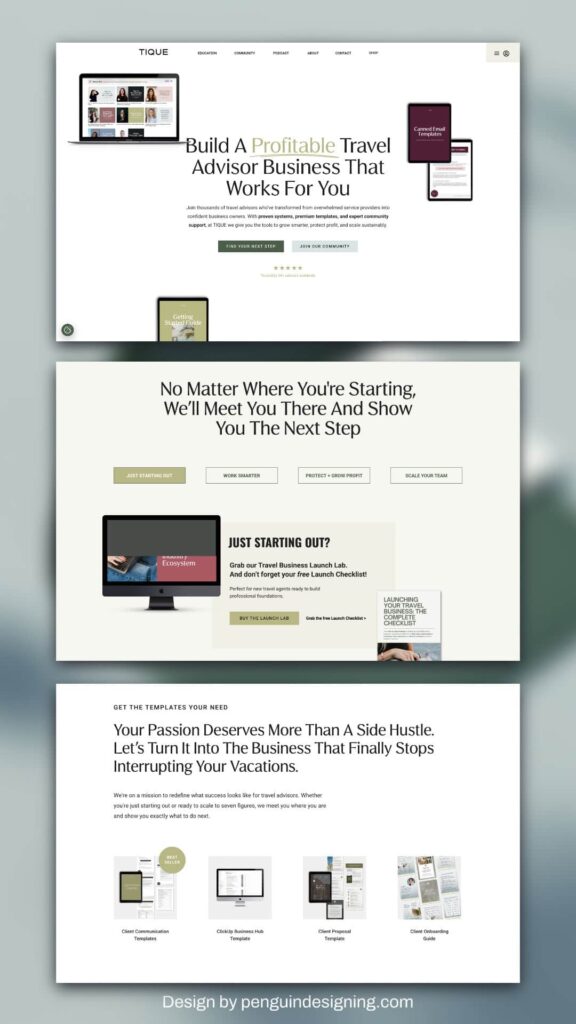
And it wasn’t because we made it prettier (although we did, just look at this new site!). It was because we made it strategic.
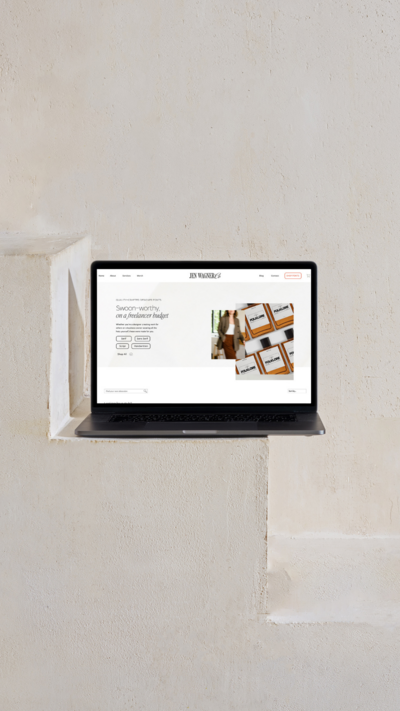
We had our launch as the biggest stress-test there is: Black Friday. And it was so good. Just look at this beauty of a site:
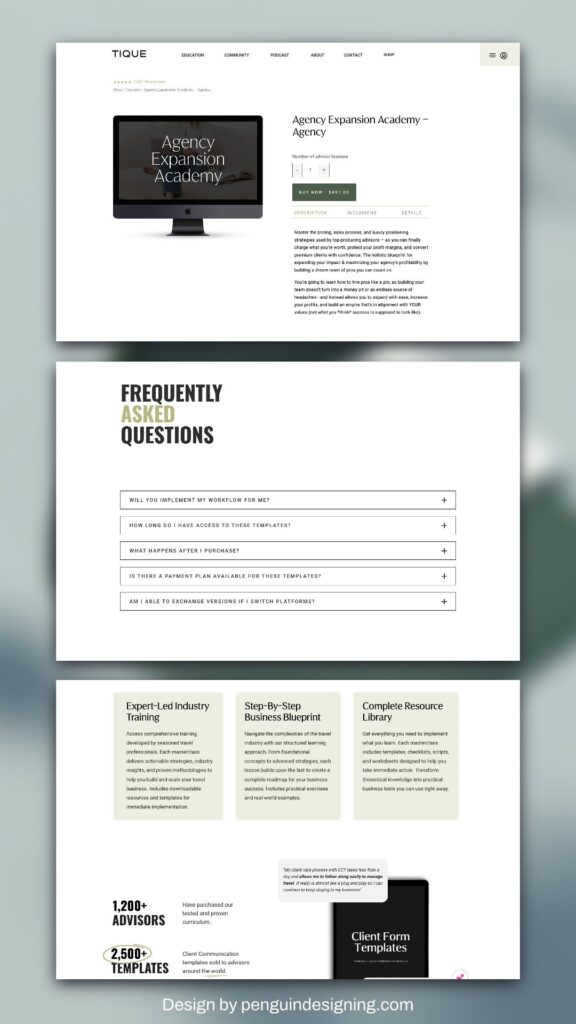
Ok long story short, the point here is this: your customer’s brain is constantly asking, “Is this safe? Is this the right move? What do I do next?”
If your website doesn’t answer these questions at every single touchpoint, you’re creating friction.
And friction kills conversions.
What they said after we wrapped:
“The level of care, foresight, and intention you brought to this overhaul is incredibly appreciated. It’s clear how much thought went into not just the visible pages, but the structure, scalability, and long-term integrity of the site… This work sets a strong foundation for growth, and it’s exactly the kind of behind-the-scenes rigor we value deeply.”
The Three Parts of Voice That Impact Conversion.
Most people think “brand voice” is just about sounding friendly or professional. But when it comes to conversion, there are actually three distinct parts of voice you need to nail:
1. Personality Voice
This is how you sound — your tone, your energy, your vibe.
Is it warm and approachable? Bold and direct? Calm and reassuring?
Your personality voice should be consistent across your entire site. If your homepage sounds playful but your sales page sounds corporate, your brain picks up on that disconnect immediately.
2. Positioning Voice
This is how you frame your expertise — your authority, your unique perspective, your methodology.
Are you positioning yourself as the expert who gets it? The guide who’s been there? The strategist who sees what others miss?
Your positioning voice is what builds trust. It’s what makes someone think, “Ok, this person knows their stuff.”
3. Conversion Voice
This is how you guide action — your CTAs, your transitions, your next-step language.
Are you asking politely? Inviting confidently? Creating urgency without being pushy?
Your conversion voice should be clear, direct, and unapologetic. No “maybe consider reaching out if you feel like it”… More like “here’s what happens next.”
What happens when these three aren’t aligned?
- Personality says friendly, positioning says expert, but conversion voice is timid = confused buyer
- Personality says bold, positioning says guru, but conversion voice is passive = credibility gap
- Personality says calm, positioning says strategic, but conversion voice is aggressive = trust erosion
The point here is that all three need to work together. When they do? Conversion feels natural, not forced. THAT is what we want!
Let’s Talk About the Pre-Sale Experience.
The pre-sale phase is where most websites lose people, and they don’t even realize it.
Your pre-sale experience includes everything from the moment someone lands on your site to the moment they decide to take action.
That’s your homepage, your about page, your services page, your blog content — all of it.
Here’s what we’re looking at: Is your site priming people to buy, or is it just… existing?
Hero Section Psychology
Your hero section is prime real estate. It’s the first thing people see, and your brain makes snap judgments in milliseconds.
If your hero section is vague, visitors bounce. If it’s too clever, they’re confused. If it’s not speaking directly to their problem or desire, they assume you’re not for them.
The decision point comes when someone lands on your homepage and either thinks “yes, this is for me” or “eh, not sure.”
I’ve worked with clients through this exact situation where their hero section was beautiful but didn’t actually communicate what they do or who it’s for.
We’d make one simple shift — getting specific about the transformation instead of hiding behind fancy adjectives — and suddenly inquiries would start rolling in.
CTA Framing: Asking vs. Inviting
Here’s a subtle but powerful difference: are you asking people to work with you, or are you inviting them?
Asking feels tentative: “If you’d like to learn more, feel free to reach out.”
Inviting feels confident: “Ready to see what’s possible? Let’s talk.”
Your conversion voice should always lean toward inviting. You’re not begging for business — you’re opening a door to something valuable.
Trust Signals (But Make Them Strategic!)
Testimonials, credentials, case studies — these all build trust. But here’s what most people get wrong: they just throw them everywhere without strategy.
Strategic trust placement means:
- Putting testimonials near objection points (like pricing or commitment asks)
- Using specific, results-focused language (not just “she’s amazing!”)
- Placing credentials where they reinforce your positioning (not just because you think you should)
Message Clarity Over Clever Copy
I’m a nerd I know, but it breaks me when I see websites trying so hard to sound clever that they forget to be clear.
Your copy doesn’t need to be poetic. It needs to answer the question: “What do you do, and why should I care?”
Clever is fun. Clear is profitable.
The During-Sale Experience: Where Money Gets Left on the Table.
This is where I see businesses lose the most revenue, especially if they’re selling products or have any kind of checkout process.
The during-sale experience is everything that happens from “I’m interested” to “transaction complete.”
For service providers: this might be your inquiry form, discovery call booking, or proposal process.
For product sellers: this is your cart, checkout, and any upsell opportunities.
The Cart Abandonment Problem
Let me tell you about a client I worked with (we’ll keep her anonymous, but let’s call her Jessy).
Jessy had a beautiful shop. Her products were great. But her cart abandonment rate was through the roof.
When we dug into it, here’s what we found:
- Her checkout had too many form fields (decision fatigue)
- There was no clear “what happens next” messaging after adding to cart
- Her upsells felt random
- The whole experience just felt… clunky
We streamlined everything.
We cut the form fields in half (and yes, she fought me on this one). We added progress indicators so people knew where they were in the process. We positioned upsells as helpful additions, not last-minute cash grabs.
The result? Cart abandonment dropped significantly, and average order value went up 12% in the first month.
The psychology here is simple: the more your brain has to work during checkout, the more likely it is to bail.
Strategic Upsells vs. Pushy Add-Ons
Here’s the difference in case you’re wandering how this would look in a practical way:
Pushy: “Do you want to add this thing for $47?”
Strategic: “Most customers who buy this also grab [complementary product] to complete/complement the setup.”
Strategic upsells feel like you’re being helpful while pushy upsells feel like you’re just trying to squeeze more money out.
Your brain knows the difference.
Missing the Bump Offer Opportunity
If you’re selling physical or digital products and you’re not using bump offers (those little “add this to your order” checkboxes), you’re leaving money on the table.
Even as a service provider, bumps can be add-ons on a proposal. Those things can bring your project revenue up from the start!
A well-placed bump offer can increase your average order value by 10-30% without feeling salesy.
The key is making it feel like a no-brainer addition. Something like: “Add gift wrapping for $8” or “Include the bonus workbook for $12.”
The Post-Sale Experience: Where Your Next Conversion Lives.
If you take just ONE thing from this entire guide, let it be this: the post-sale experience is where your next conversion is born.
Most businesses treat the sale as the end. But really? It’s just the beginning.
The Momentum Window
There’s a critical window of time right after someone buys from you — usually 24 to 72 hours — where they’re still in buying mode.
Their brain just made a decision. They’re feeling good about it (hopefully). And they’re actually more open to continuing the journey with you than they will be two weeks from now.
This is your opportunity to:
- Validate their purchase decision with immediate value
- Create strategic touchpoints that bridge to the next offer
- Build anticipation for what’s next
Consider what happens when you just… don’t do anything post-purchase.
The momentum dies.
The relationship stalls.
And when you want to sell to them again three months later, you’re basically starting from scratch.
What Actually Happens Post-Purchase
For most businesses, the post-purchase experience is:
- Order confirmation email
- Shipping notification (if physical product)
- …crickets
That’s it. That’s the whole experience. Womp womp..
And then they wonder why customers aren’t coming back.
Here’s what should happen instead:
Immediate: Confirmation email that reinforces their decision and sets expectations. Throw the confetti with them, celebrate it!
24-48 hours: A welcome sequence that delivers value and starts building the relationship. It can be short, but have something!!
Need help with better email marketing? Read my Email Marketing Guide for Service Providers next →
Week 1: Check-in touchpoint that invites engagement (not just “how was your purchase?”)
Ongoing: Strategic nurture that positions your next offer as the natural next step
You’re not being pushy. You’re being super intentional about maintaining the momentum they already created by buying from you.
CRO Can’t Be Separated from Brand Strategy.
Please don’t think that conversion optimization lives in a silo.
I see this all the time… businesses hire a “CRO expert” who comes in, changes button colors, tweaks some copy, and calls it a day.
And yeah, sometimes that works. Because truly, it’s rare to need a groundbreaking solution, it’s the cumulative mini things that keep it broken…
But most of the time? The issue isn’t surface-level.
The issue is that the brand strategy isn’t supporting conversion.
Your brand either:
- Reinforces trust at every touchpoint, or creates tiny moments of doubt
- Guides people naturally toward action, or leaves them wondering what to do
- Builds momentum through the customer journey, or stalls out at random points
You can’t just “optimize for conversion” if your brand messaging is vague, your visual hierarchy is all over the place, and your positioning is unclear.
CRO without brand strategy is like trying to patch a leaky roof without fixing the foundation. You might stop one leak, but three more will pop up.
The “Clarity Over Cleverness” Principle
To add more onto the whole messaging thing, I need to bring up some more examples focusing on conversion rate optimization so you see the difference:
Clever: “We architect experiences that transcend the ordinary.”
Clear: “We design high-converting websites for coaches and creatives.”
Which one makes you immediately understand what they do?
Clever might get you style points. Clear gets you clients.
Visual Hierarchy + Messaging = Conversion
Your visual design should be working with your messaging, not against it.
If your most important CTA is buried below the fold in tiny text, your visual hierarchy is sabotaging your conversion voice.
If your hero image is so bold that no one reads your headline, your design is overpowering your message.
Everything needs to work together:
- Your design guides the eye
- Your copy speaks to the brain
- Your CTAs create clear next steps
- Your brand reinforces trust
When all of that is aligned? Conversion becomes natural.
What To Do About It:
Ok long story short, here’s what you need to do:
Start by auditing your current experience.
Walk through your own site as if you’re your ideal customer.
Ask yourself:
- Where does my brain have to work too hard to understand what’s happening?
- Where am I left wondering what to do next?
- Where does the momentum break or feel forced?
Then look at your Pre/During/Post flow.
Map out what actually happens at each stage — not what you think should happen, but what’s currently there. The gaps will become painfully obvious.
Need help digging more into this? My Fast Flow Offer Stack® is for you →
Focus on one leak at a time.
Maybe your hero section needs clearer positioning. Maybe your checkout has too many decision points. Maybe your post-purchase experience is basically nonexistent. Pick the biggest leak and fix it strategically, not reactively.
DO NOT try to overhaul everything at once.
That’s how you end up overwhelmed and stuck in analysis paralysis.
Test and measure.
Make one change. See what happens. Adjust. Repeat.
The businesses that convert consistently aren’t the ones with perfect websites from day one. They’re the ones that understand conversion is an ongoing practice, not a one-time fix.
All That We Talked About? You Can Absolutely Fix This.
For most established businesses, you don’t need a complete rebrand. We evolve it.
You don’t need to scrap your entire website and start over. We identify where the leaks are and patch them strategically while redesigning it to align with your brand growth.
That’s exactly what I help my clients do through site audits, strategic consulting, and my signature brand and web design service.
We look at the Pre/During/Post flow, identify the friction points, and create a clear plan to fix them.
If you’re tired of watching traffic come in but conversions stay flat, this is your opportunity to get an expert eye on what’s actually breaking.
Your beautiful website can absolutely be profitable, too. It just needs the right strategy behind it.
filed under:

I'm Ingrid, welcome! I'm a branding designer + Showit Design Partner, doggy mamma, and tea drinker.
get to know me »




P.S. Found value in this post? You can always drop a little something in the treat jar — this goes toward treats for my pup (yes, Yui loves it) and fueling more great content! 💜
Ready to turn your website into a powerhouse lead generator even on a saturated market?
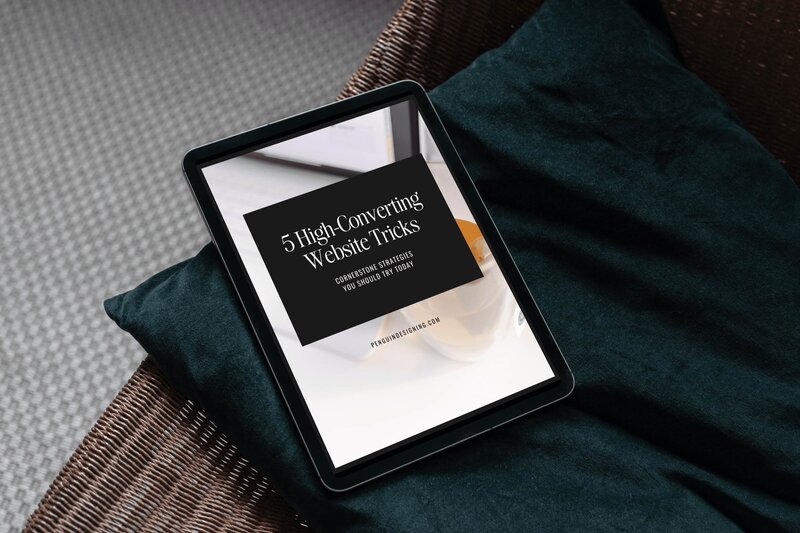
My free guide, "5 High Converting Website Tricks", gives you key strategies to create a website that showcases your brand, attracts your ideal clients, and is ready to convert them into paying customers.
Download now for free!
Featured Case Studies
Jen Wagner Co
Shopify to showit with Woocommerce shop Migration
TIQUE
Custom Brand + Showit Website + Shop

Blanc Salváge
Brand Strategy + showit Shop Design + Copywriting
Revitalized Health & Wellness Counseling
Custom Brand + Website

Wordfetti + Wordshop
showit Website + shop Design & Development

Editorial Stock Images
showit shop + Multi-level Membership


Amy Posner
Brand Strategy + Custom Brand + Showit Website

Our clients lead their industry.

Hi I’m Ingrid
I design strategy-led brands and Showit websites that confidently represent you.
I’m a designer with a magic touch for monetizing websites. I’m also a tea-lover, dog momma, Ravenclaw, INFP and 2w3 (for all you personality-test nerds like me).
I’ve also been called a Showit website expert (been with them since 2013), and a sucker for understanding customer journeys, brand psychology, and consumer and sales psychology. My clients have some pretty cool results after working together, things like doubled shop conversions, booked-out services in weeks, and increased monthly revenue, among other cheer-worthy celebrations.