How to Write a USP That Actually Attracts the Right Clients

Let’s talk about something that trips up business owners at every stage: the Unique Selling Proposition. Or Unique Value Proposition. (You’ll see both floating around. They’re slightly different in theory and basically the same conversation in practice, so we’re treating them as one here.)
Here’s the thing most people get wrong about their USP: they think it’s something you figure out when you launch, write on your website, and leave there forever… never to be touched again.
That’s not how this works 😅 your USP is a living thing.
It should evolve as your business evolves, as your ideal client shifts, and as the market around you changes. And if you’re still leading with the same message you launched with three years ago? There’s a real big chance it’s actually working against you now.
So What Actually Is a USP and Why Does Every Business Need One?
Your Unique Selling Proposition is the clearest, most compelling answer to the question your ideal client is always asking in their mind: Why should I choose you over everyone else offering the same thing?
It’s not your cute tagline that you have on your third logo variation. It’s not your mission statement. And it’s definitely not a list of everything you do.
Your USP is the specific outcome-driven reason someone would pick you: It’s clarity about who you’re for, what you help them achieve, and what makes your approach different.
And here’s it absolutely matters whether you’re brand new or have been in business for a decade:
If you don’t define your unique selling proposition, your audience will do it for you. (And they’ll get it wrong.)
Without a clear USP, you end up attracting whoever happens to find you rather than the people you can actually serve best. Your messaging tries to speak to everyone. And content that speaks to everyone connects with no one.
Your USP is what does the attracting and the repelling! It draws in the clients who are the best fit for what you do and filters out the ones who aren’t before either of you wastes each other’s time.
Your USP Needs to Grow With You
Your unique selling proposition isn’t just a starting line to get the business rolling at the beginning, it needs to grow with you.
The message that got you your first five clients probably isn’t the message that will get you your next fifty. The positioning that worked when you were building your reputation is different from the positioning you need when you’re scaling your offers. Think about it this way: the clarity you needed at $30K is different from the clarity you need at $300K.
Evolving your USP doesn’t mean abandoning your brand at all! It means honoring how far you’ve come and making sure your messaging actually reflects who you are now, not who you were two years ago.
Unique Value Proposition Examples Across 10+ Industries
I want to show you this across a range of businesses, because one of the most common things I hear is: “I see how this works for coaches, but how would that apply to me?”
So let’s fix that right now! Below you’ll find unique selling proposition examples for service providers, product-based brands, and creative professionals at two different stages of business growth so you can see how this works!
Brand Designer / Web Designer
What most designers say (sorry friends!): “I design websites and brand identities.”
A stronger USP to start with: “Clean, strategic brand and web design for new service providers who want to look credible and professional from day one.”
An evolved USP as the business grows: “Strategy-led Showit websites and brand systems for established founders who are done leaving money on the table. Design that’s built to convert, not just impress.”
Notice what changed: the audience got more specific, the outcome got sharper, and the point of difference became impossible to miss as we clearly stated.
The evolved message filters out not-so-ready peeps and attracts ready-to-invest clients. That’s the USP doing exactly what it’s supposed to do.
Business Coach / Mentor
What most coaches say: “I offer coaching sessions to help you grow your business.”
A stronger USP: “Business coaching for service providers in their first three years who are done spinning their wheels and ready to build something that actually pays them consistently.”
Evolved for a more established practice: “Strategic mentorship for six-figure coaches who’ve hit a ceiling. We break through the plateau without burning down what you’ve already built.”
Same profession. Completely different message, clients, and energy! Your unique selling proposition can and should shift as you move upstream into higher-level clients and deeper results.
Social Media Manager / Content Strategist
What most say: “I manage social media for small businesses.”
A stronger USP: “Done-for-you Instagram management for wellness brands who want to show up consistently without sacrificing another weekend to content creation.”
Evolved as the brand niches further: “Content strategy and management for health and wellness coaches scaling to multi-six figures, so your social presence finally matches the business you’ve built.”
Virtual Assistant / Online Business Manager
What most VAs say: “I help business owners with administrative tasks and day-to-day operations.”
A stronger USP: “Organized, proactive online support for busy coaches and course creators, so nothing falls through the cracks and you can actually focus on your zone of genius.”
Evolved for an OBM positioning: “Operations strategy and team management for growing online businesses. I step into your business, find the gaps, and build the systems that let you scale without the chaos.”
Photographer
What most photographers say: “I do brand photography and headshots.”
A stronger USP: “Brand photography for entrepreneurs who are ready to finally show up online with visuals that stop the scroll and actually reflect who they are.”
Evolved for a more elevated positioning: “Strategic brand photography experiences for established service providers and coaches. Curated visuals and a full content library designed to fuel an entire quarter of marketing.”
Wedding Planner / Coordinator
What most say: “I plan and coordinate weddings.”
A stronger USP: “Full-service wedding planning for couples who want a deeply personal, intentionally designed day without spending the next twelve months overwhelmed by decisions.”
Evolved for a luxury positioning: “Luxury wedding direction for discerning couples who want an editorial, one-of-a-kind experience. Every detail curated, every moment considered, nothing left to chance.”
Sugar Flower Artist for Weddings
What most say: “I make handcrafted sugar flowers for wedding cakes.”
A stronger USP: “Handcrafted sugar flowers for wedding cakes that look so real, your guests won’t believe they’re edible. And your photographer won’t be able to stop shooting them.”
Evolved as the brand becomes more recognized: “Bespoke sugar florals for luxury weddings and editorial cakes. Botanical artistry that transforms your centerpiece into an heirloom moment.”
Jewelry Brand
What most say: “We sell handmade jewelry.”
A stronger USP: “Handcrafted jewelry for people who want to feel elegant every day, not just on special occasions.”
Evolved as the brand grows: “Modern heirloom jewelry designed for the person who doesn’t wait for a reason to feel beautiful. Minimalist, intentional, built to last.”
Candle Brand
What most say: “We make small-batch, handcrafted candles.”
A stronger USP: “Small-batch soy candles for the person who wants to make their home atmosphere truly their own. Because how your space smells is part of how you feel in it.”
Evolved with a niche: “Mood-first soy candle collections for intentional living. No artificial fragrances or colors, just clean scents in hand-made vessels that transform your environment the moment you light it.”
Organic Skincare Brand
What most say: “We sell organic skincare products.”
A stronger USP: “Simplified organic skincare for sensitive skin. Fewer ingredients, real results, no overwhelming 12-step routine.”
Evolved as the brand expands: “Skin-first formulations for people who’ve tried everything and are finally done compromising. Clean, organic, and clinically-informed ingredients that are effective and gentle with your sensitive skin.”
What Every Strong USP Has in Common
Look back through every example above. Whether we’re talking about a jewelry brand USP, a coaching business value proposition, or a wedding vendor positioning statement, the same patterns show up every time.
It speaks to a specific person.
When I say specific I mean:
Not “entrepreneurs” but coaches scaling past six figures. (See the difference?)
Not “people who like nice things” but someone who wants to feel elegant every single day. (oh yes, painting a picture here!)
The more specific you are, the more the right person feels like you’re speaking directly to them. (That specificity is what makes them stop scrolling and pay attention to YOU.)
It leads with the outcome, not the service.
Not “I plan weddings” but “I handle every detail so you can actually enjoy your engagement.” See? more clear.
Not “we sell candles” but “we change how your home feels.” The transformation is always way more compelling than the deliverable. Always!
It does the repelling too (and you definitely want this!).
A strong unique selling proposition tells the wrong clients this isn’t for you in a way that feels natural, not aggressive. And it’s not a loss, that’s protection for you and respect for them.
It evolves with you and your season of business.
You can see that every evolved example in this post isn’t a correction of the earlier one at all, it was a natural progression: the starting USP was right for that season, then the evolved one is right for the next!
How to Know When It’s Time to Revisit Yours
Here are a few signals I would recommend paying attention to as it might be a clear indicator that your unique value proposition needs some attention:
- You’re attracting a lot of inquiries but they’re consistently not quite the right fit
- Conversations often start with “Wait, so what exactly do you do?”
- Your messaging feels broad, like it could apply to almost anyone in your industry
- Your business has grown significantly but your website still sounds like it did two years ago
- You feel like you’re constantly having to explain your value instead of people just getting it
Any of those feel like a “yep that might be me”? It might be time. (And if you’re nodding at more than one, definitely time.)
Clarity Is What Makes Everything Else Work
Your USP isn’t a nice-to-have or a business jargon piece that you can skip on… It’s the foundation that everything else in your messaging gets built on: your website copy, your social content, your sales conversations, your offers. All of it.
When your unique selling proposition is clear, everything else becomes easier! Content feels more natural to create, your right-fit clients find you and already feel like you understand them, sales conversations stop feeling like convincing sessions and start feeling like confirmations.
That clarity is worth working on in my professional opinion. At the beginning. In the middle. And every time your business levels up to something new.
Because your messaging should always be growing with you!
Ready to Get Clear on Yours?
If this post got the wheels turning, here’s where to go next:
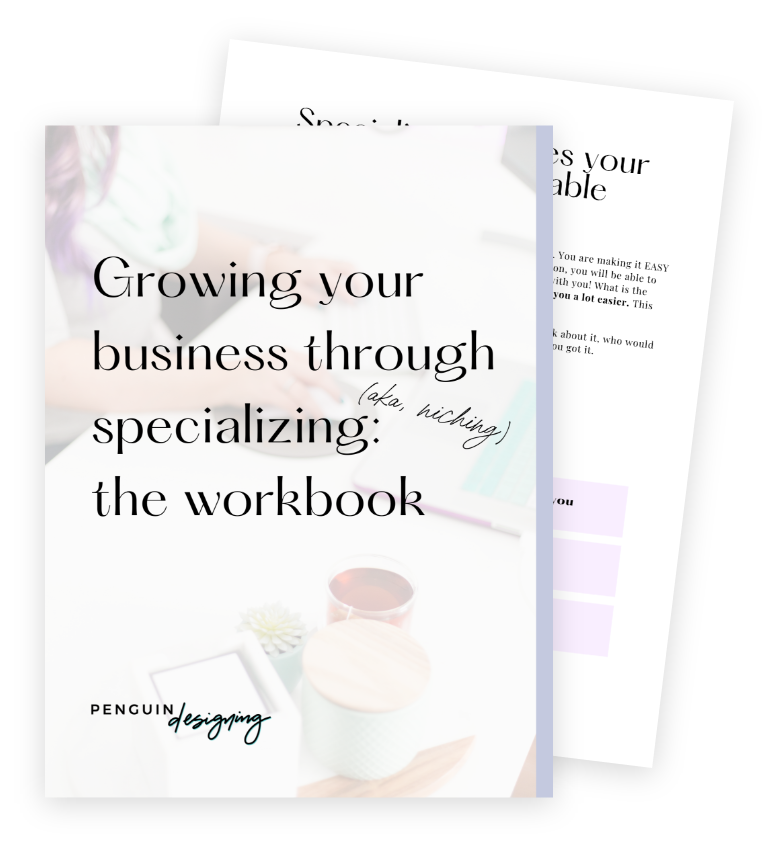
Start here (it’s free!): TheNiching Workbook is a step-by-step resource to help you find your brand’s specialty in the market and make profitable business moves, even as a multi-passionate entrepreneur. It’s basically the hands-on companion to everything we just talked about.
Ready to go deeper? TheSpellbinding Brand Blueprint ($97) is a workbook designed to help you analyze whether your brand is actually built to convert, and sharpen your visuals and messaging to connect with your right-fit audience in a way that’s both genuine and strategic.
And if your business has grown but your brand and website haven’t kept up? That’s exactly the kind of project we love. Explore what it looks like to work together →
filed under:

I'm Ingrid, welcome! I'm a branding designer + Showit Design Partner, doggy mamma, and tea drinker.
get to know me »




P.S. Found value in this post? You can always drop a little something in the treat jar — this goes toward treats for my pup (yes, Yui loves it) and fueling more great content! 💜
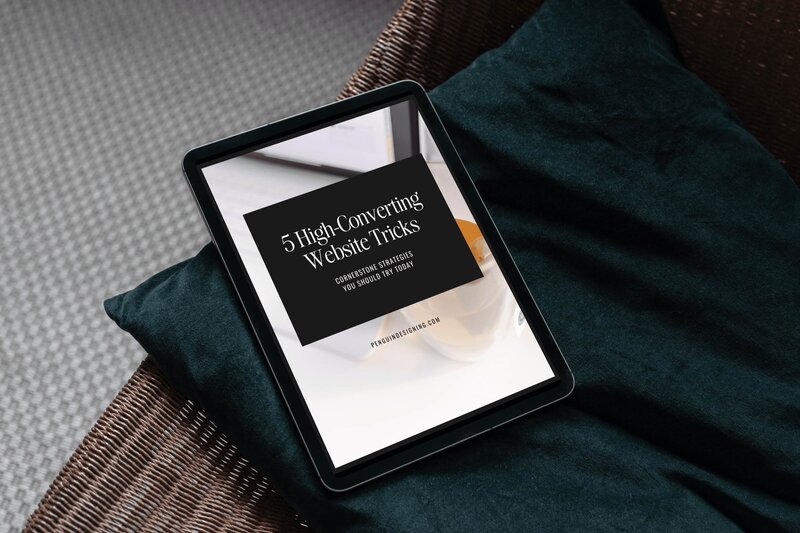
Ready to turn your website into a powerhouse lead generator even on a saturated market?
My free guide, "5 High Converting Website Tricks", gives you key strategies to create a website that showcases your brand, attracts your ideal clients, and is ready to convert them into paying customers.
Download now for free!
Featured Case Studies
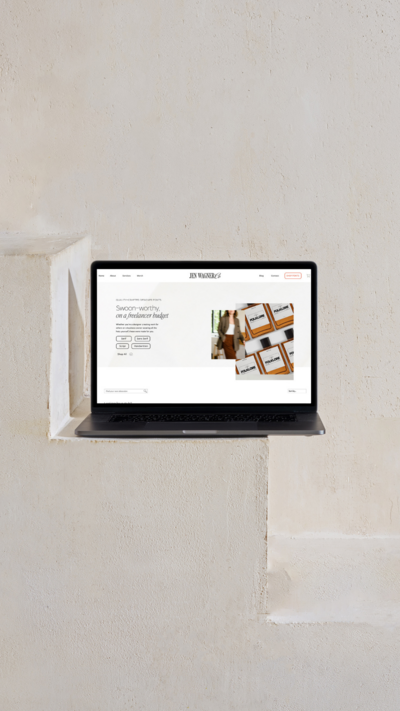
Jen Wagner Co
Shopify to showit with Woocommerce shop Migration
TIQUE
Custom Brand + Showit Website + Shop

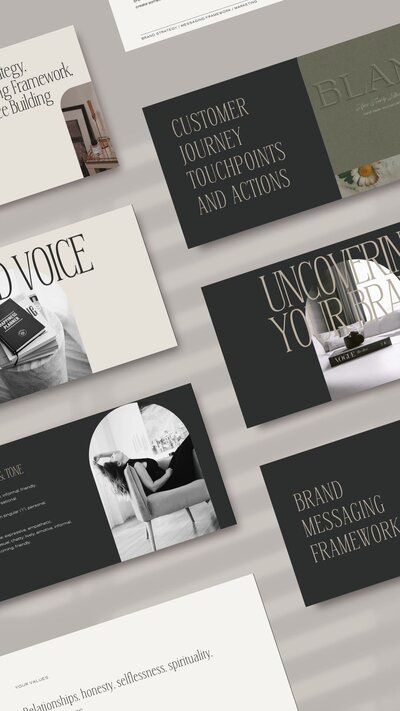
Blanc Salváge
Brand Strategy + showit Shop Design + Copywriting
Revitalized Health & Wellness Counseling
Custom Brand + Website

Wordfetti + Wordshop
showit Website + shop Design & Development

Editorial Stock Images
showit shop + Multi-level Membership


Amy Posner
Brand Strategy + Custom Brand + Showit Website

Our clients lead their industry.

Hi I’m Ingrid
I design strategy-led brands and Showit websites that confidently represent you.
I’m a designer with a magic touch for monetizing websites. I’m also a tea-lover, dog momma, Ravenclaw, INFP and 2w3 (for all you personality-test nerds like me).
I’ve also been called a Showit website expert (been with them since 2013), and a sucker for understanding customer journeys, brand psychology, and consumer and sales psychology. My clients have some pretty cool results after working together, things like doubled shop conversions, booked-out services in weeks, and increased monthly revenue, among other cheer-worthy celebrations.