The website audit checklist that beats any market research you’ll ever buy

Maybe you have read it somewhere, or you have heard it straight from a lead that the packages feel too restrictive… Maybe it’s a bride trying to find the right photographer, or a founder trying to book a copywriter. And then they book the provider with the cleanest three-tier menu on the page. Not the flexible one with super custom options, aka not the one she said she wanted! The simple one, because it made the decision easy.
Can I tell you something? that’s not a random fluke, and it’s not just brides (but I’ve seen this WAY too many times in my years of working with photographers…) NielsenIQ calls it the say-do gap, and it shows up CONSTANTLY: someone answers a survey question honestly, and then behaves like a completely different person once real money and a real decision are in front of them. Price, timing, what’s actually on the page… none of that is present in a hypothetical question, so the hypothetical answer only ever tells you part of the story. Mind. Blown. 🤯
If you’ve ever built a page, an offer, or a set of packages around what your market research told you people want, and then watched your own audience do something else entirely once the page went live… you’ve met the gap too. But let’s talk about what we can do to close that!
What market research can actually tell you, and where it stops
Surveys, voice-of-customer research, competitor studies… all of it earns a real seat at the table (and you know me if you’ve been here for a while, I make things EARN it’s place).
It tells you the language your audience actually uses, points you in a direction before you’ve built anything, and gives you a nice head start on the market. I build EVERY strategy on top of this kind of research, and I’m not telling you to skip it!
But no amount of research, no competitor study, no report, not even a survey of your exact market, can tell you if you present your packages this way, you’ll book more. That only ever gets settled in one place: your own site, with your own traffic.
Everything external gives you sentiment, direction, and language you need to take into account while you build. It cannot close the loop between a change and a result. Only your analytics can do that!
Why your own site is the only place this gets settled
Back to the bride example. She wasn’t lying in that survey, if it’s from a reputable market research outreach type of information collection, then you know that it’s truly something that they could have said. Restrictive packages are a common complaint! And if you asked a hundred people, plenty would say the same thing. But when she’s actually staring at three options with prices next to them, the cleanest menu wins, because clarity beats flexibility right at the moment someone has to make a decision. (Have you heard of analysis paralysis? same concept).
A website is never a “one and done.” It’s a living data source you use to sharpen your own marketing and conversions, for as long as the site is up. So the work doesn’t stop at launch, it starts there. Once real traffic hits a real page, you check: are they not booking, not buying? Then you tweak. Are they buying more than before? Then you pour gasoline on what’s working 🔥
This is the same idea behind why your footer can be making (or losing) you money or why buyer psychology matters more than the design trend of the moment, that answer was never going to show up in a competitor study. It shows up in what your own people actually do once they’re on your page.
If you want a starting point for that kind of self-check before you bring in outside eyes, my Website Optimization Checklist walks you through the best-practice basics you can apply regardless of platform, free, so you have somewhere to start today 💜
The website audit checklist you need to run after launching
So what does “checking your own data” actually look like? A real website audit checklist, run after every launch (not just once, a year in), covers a few non-negotiable spots:
- Where people land first, and whether it matches what brought them there. A mismatched hook between the ad, email, or search result and the page itself is one of the fastest ways to lose someone before they’ve even read a word.
- Where they stop scrolling. If your data shows a steep drop before the offer or pricing section, that’s not a “maybe someday” fix, that’s the first thing to do.
- What they click, and what they ignore. A button nobody presses is telling you something a mood board never will.
- Where the checkout or booking flow actually leaks. This is usually a smaller, more specific fix than people expect, and a clean audit catches that where a full redesign would just paint over.
- What changed the last time you touched the page, and whether the numbers moved because of it or in spite of it.
None of this requires guessing! It requires looking, on a real cadence (I like to do it every quarter for me and my clients), at what your own audience is actually doing. And if diagnosing that on your own feels like a lot on top of everything else you’re running, that page-by-page diagnostic work, with specific recommendations instead of vague notes, is part of what I do inside my services.
Where AI fits into this (and where it doesn’t)
You could feed your website to any AI right now and ask it for a report on your SEO, your conversions, or what it would suggest. It’ll most likely bring up some solid things, plenty of them true on a VERY general level. I wrote about the difference between assistive and generative AI recently, and this is the same thing: the tool is truly useful, and it is not the same as understanding your business. (Don’t even get me started on the agencies and pros who “recommend an AI audit” with prompts for their leads without giving their actual strategy even a glance over…)
So the downfall? Does it have the context to understand your audience, your business, and your actual goals? If it tells you “this page is buried, no one will find it,” does it know that page already brings in plenty of traffic from referrals, and burying it deeper in your nav was never the problem you needed solved? An AI can analyze. It cannot sit in your goals with you. So context and data are both important, together, not one instead of the other!
How often should I audit my own website data?
After every real change (a new page, a new offer, a redesigned section) and then on a regular cadence after that, quarterly is a reasonable default for most small businesses to gather enough data where you edit in one month and let 2 months of data accumulate, so you catch a dip before it becomes a pattern.
What’s the difference between market research and a website audit?
Market research tells you what a group of people say they’d do before anything exists. A website audit tells you what your actual audience did once the thing was real, live, and in front of them. You need both, but only one of them can ever be marked “confirmed.”
What to do with what you actually find
This whole idea maps onto the Post phase of my PDP Experience Loop, the part of the customer journey most businesses skip because the Pre phase (the marketing, the launch, the getting-the-sale part) gets all the attention. But Post is where trust, retention, and the next sale actually get built, and a website audit is one of the simplest ways to work that phase instead of waiting to find out by accident what’s not working and what is.
A few things I’d recommend to do with this:
- Pick one page and pull the real numbers before you touch anything else on your site.
- Compare what you find against what your research told you to expect, and notice where they disagree.
- Make one change at a time so you know which one moved the number.
- Keep what’s working. Don’t “improve” a page that’s already converting just because it’s been a while.
You could absolutely start with the Website Optimization Checklist, free, and run your own first pass this week 🙌 (or if you’d like something a bit more paced, my Site Elevate is also free and perfect).
And if you’d rather hand the diagnostic work to someone who does this for a living, a CRO Audit runs my RAINBOW method against your actual pages, with specific recommendations instead of general notes. Your research gave you a direction, and your own data gets to have the final word!
filed under:

I'm Ingrid, welcome! I'm a branding designer + Showit Design Partner, doggy mamma, and tea drinker.
get to know me »



P.S. Found value in this post? You can always drop a little something in the treat jar — this goes toward treats for my pup (yes, Yui loves it) and fueling more great content! 💜
Ready to turn your website into a powerhouse lead generator even on a saturated market?
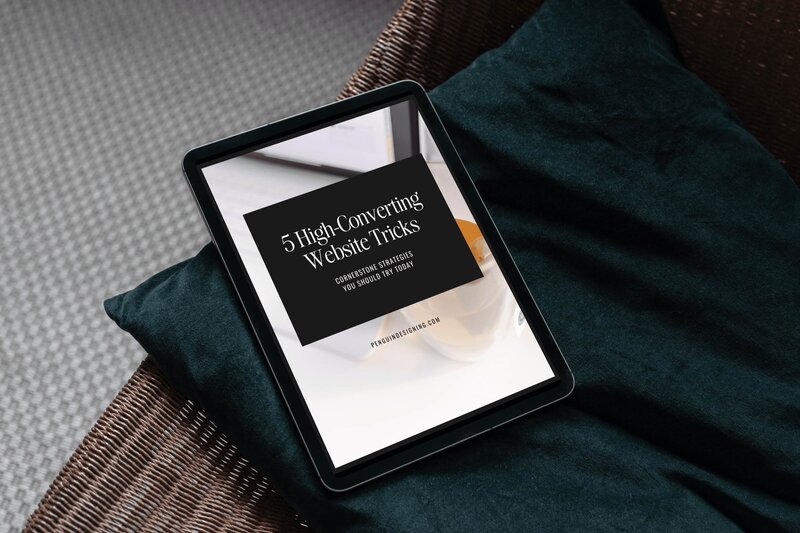
My free guide, "5 High Converting Website Tricks", gives you key strategies to create a website that showcases your brand, attracts your ideal clients, and is ready to convert them into paying customers.
Download now for free!
Featured Case Studies
Jen Wagner Co
Shopify to showit with Woocommerce shop Migration
TIQUE
Custom Brand + Showit Website + Shop

Blanc Salváge
Brand Strategy + showit Shop Design + Copywriting

Revitalized Health & Wellness Counseling
Custom Brand + Website

Wordfetti + Wordshop
showit Website + shop Design & Development

Editorial Stock Images
showit shop + Multi-level Membership


Amy Posner
Brand Strategy + Custom Brand + Showit Website

Our clients lead their industry.

Hi I’m Ingrid
I design strategy-led brands and Showit websites that confidently represent you.
I’m a designer with a magic touch for monetizing websites. I’m also a tea-lover, dog momma, Ravenclaw, INFP and 2w3 (for all you personality-test nerds like me).
I’ve also been called a Showit website expert (been with them since 2013), and a sucker for understanding customer journeys, brand psychology, and consumer and sales psychology. My clients have some pretty cool results after working together, things like doubled shop conversions, booked-out services in weeks, and increased monthly revenue, among other cheer-worthy celebrations.