How to Get Your Online Shop Ready for Black Friday in 2026

Black Friday lands the day after Thanksgiving, with Cyber Monday right behind it, and it always shows up faster than it feels like it should.
The best source I’ve found for 2026 is a free tracker called The BFCM Forecast, from KNO, Stamped and Repeat, which posts how the season is going and updates daily. I went through ALL of it with my conversion brain switched on and pulled out what I’d actually do with it if I were getting a shop ready this week. Below is my plan for Pre, During and Post (it works any year!). Still setting up your shop? Start with my guide to selling with WooCommerce on your Showit website, then come back here.
I run everything through my PDP Experience Loop: Pre, During and Post. Most shops over-invest in Pre and under-invest in During and Post, which is where trust and repeat sales actually get built. So what would all three look like for Black Friday? Here is how I’d split it…
Pre: start with the people who already know you
Email your list before Thanksgiving.
Your list is the fastest group to reach, and an early-access email lets them shop before the inbox gets looooud. And if you’re sending, send in the morning: in the tracker’s hourly view, sales pick up in the morning U.S. time and stay strong through the afternoon.
Write to the buyer, not the gift guide.
Gifting comes later in the season (in the numbers below it was only close to half of orders by Thanksgiving week), so I’d write Black Friday week to the person treating themselves: what they get, how it changes their day, when the offer ends. The gift guide can wait for the first week of December!
Make your offer pages easy for AI assistants to read.
People are starting to find brands through AI assistants, and in the 2026 numbers that was the fastest-growing source. Each offer page should answer the basics in plain sentences: who it’s for, what’s included, what it costs, and a few FAQs. If your platform lets you add product schema, add it too… plain sentences help the person reading and the assistant summarizing alike!
During: fix the page before you send people to it
I NEVER send paid traffic to a page that isn’t converting yet. I fix it for the visitors it already gets first, then pay to send it more. And I fix the cheapest things first:
- Working links, forms and buttons (click every single one, on your phone too)
- Clicking through the shop like a real visitor, from the first email or pin all the way to the thank-you page
- The words and the buttons on your offer page
Then look at your checkout… Across 50 studies Baymard compiled (last updated September 2025), the top reason shoppers gave for abandoning a cart was extra costs being too high, at 40%. So I’d put shipping details on the product page instead of saving the surprise for checkout.
And if you discount, say it plainly: the amount, the end date and what it applies to. A real deadline is plenty. I’ve talked myself into a lower price to chase volume before, and it did NOT work, so I price on value and name any discount out loud. When shoppers are spending more per order (they were in 2026), I’d also test a bundle or a bonus next to a straight discount… and see which one YOUR shoppers pick!
Post: plan the part after the sale
Set up the review request email now.
Email was the biggest source of reviews in Stamped’s 2026 data, so have it ready to go out on its own after Black Friday orders arrive.
Pick the date of the second email before the sale starts.
If you sell something people reorder, the median days between purchases in Repeat’s 2026 data are a decent starting point (around a month for food and wellness, closer to two for beauty and everything else), and you know your own product’s rhythm better than any report does! If what you sell isn’t a reorder kind of thing, this is where offer synergy comes in: what is the next thing that makes sense for this buyer?
Look at your own numbers afterward.
Market research gives direction and language, but only your own shop’s data tells you what converts. I audit after every launch and every quarter after that, and I’d do the same after this season.
The numbers
KNO, Stamped and Repeat all sell ecommerce tools, and the figures come from the brands that use them. Their year over year comparisons only include brands that sold in both 2025 and 2026. So treat this as a weather report, not a promise for your shop (your forecast may vary!!).
And if you’re thinking “Ingrid, those are bigger brands than mine, why does this matter to me?”… fair! I’d still rather you use it for planning (who shops when, who comes back, where people find brands) and then test it on your own shop than copy anyone’s numbers.
- The season started early: From October 1 to November 3, revenue was up 38.5% and orders were up 26.5% compared to the same weekdays in 2025. The single biggest hour so far was on Sunday, November 1, and the pacing has stayed close to +40% since early October, so this was not a last-minute spike!
- Shoppers are spending more per order: Revenue is growing faster than order counts, which means the average order is getting bigger, not just the number of orders.
- Gifting comes later in the season: In KNO’s survey, gifting was about one in five orders in October 2025, close to half the week of Thanksgiving, and around 60% by mid-December. That makes Black Friday week mostly people buying for themselves.
- AI assistants are the fastest-growing way people find brands: In KNO’s survey of where buyers first heard about a brand (the last 90 days, compared to last year), orders from AI assistants grew 222%, from a small starting point, and their share gained about a point. Meta (Facebook and Instagram) grew 12.9% and Google grew 8.8%. Word of mouth lost about a point of share.
- Buyers come back in a month or two: Repeat’s median time between purchases is 32 days for Food & Beverage, 31 for Health & Wellness, 68 for Beauty & Cosmetics and 73.5 for everything else. In Food & Beverage, roughly 7 in 10 orders came from returning customers.
- Email is the biggest source of reviews!! Stamped reports that 44% of reviews in the week of November 1 came in through email.
The plan above works any year, and it’s always nice to look at past data to make educated decisions!
Want a second set of eyes?
If your shop (or one page of it) isn’t converting the way you want before the season really kicks in, my CRO Audit looks at one page at a time, and my Shop Audit is a conversion walkthrough of a whole store.
Whatever you run this year, I’m rooting for your shop (and for your inbox, because it is about to get busy too)!
Sources
- The BFCM Forecast, from KNO, Stamped and Repeat (a free tracker that may ask for your email to view it).
- Baymard Institute, Cart Abandonment Rate Statistics (last updated September 2025), for the extra costs figure.
- The PDP Experience Loop, the audit habits and the lessons about discounting are from my own work with shops.
filed under:

I'm Ingrid, welcome! I'm a branding designer + Showit Design Partner, doggy mamma, and tea drinker.
get to know me »




P.S. Found value in this post? You can always drop a little something in the treat jar — this goes toward treats for my pup (yes, Yui loves it) and fueling more great content! 💜
Ready to turn your website into a powerhouse lead generator even on a saturated market?
My free guide, "5 High Converting Website Tricks", gives you key strategies to create a website that showcases your brand, attracts your ideal clients, and is ready to convert them into paying customers.
Download now for free!
Featured Case Studies
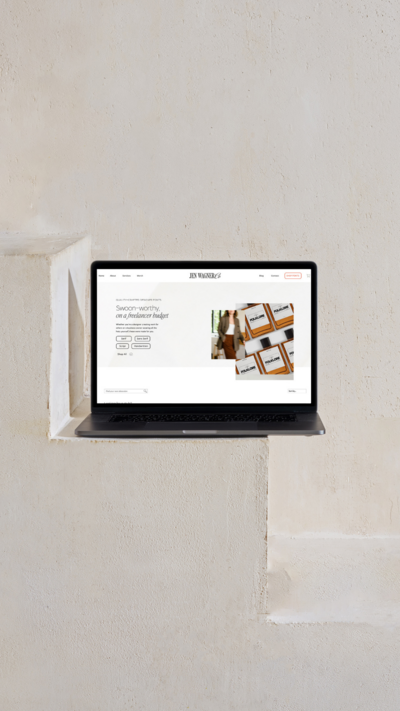
Jen Wagner Co
Shopify to showit with Woocommerce shop Migration
TIQUE
Custom Brand + Showit Website + Shop

Blanc Salváge
Brand Strategy + showit Shop Design + Copywriting
Revitalized Health & Wellness Counseling
Custom Brand + Website

Wordfetti + Wordshop
showit Website + shop Design & Development

Editorial Stock Images
showit shop + Multi-level Membership


Amy Posner
Brand Strategy + Custom Brand + Showit Website

Our clients lead their industry.

Hi I’m Ingrid
I design strategy-led brands and Showit websites that confidently represent you.
I’m a designer with a magic touch for monetizing websites. I’m also a tea-lover, dog momma, Ravenclaw, INFP and 2w3 (for all you personality-test nerds like me).
I’ve also been called a Showit website expert (been with them since 2013), and a sucker for understanding customer journeys, brand psychology, and consumer and sales psychology. My clients have some pretty cool results after working together, things like doubled shop conversions, booked-out services in weeks, and increased monthly revenue, among other cheer-worthy celebrations.