WooCommerce vs Etsy for Showit Users

I’m going to assume that you’re here because you either already have a shop or you’re planning to open a shop. Now, more specifically, for us Showit users with something to sell, WooCommerce gives you more brand control, better profit structure, and full customer data ownership. Etsy can play a useful supporting role but, in my experience, it was never built to be your primary business foundation.
If you have a Showit website and something to sell, there’s a very good chance Etsy is already on your shortlist! Not necessarily because it’s the best fit, but because it feels like the path with the least technical risk. And obviously you might have already shopped at Etsy, and I do love to find a good trinket myself! While WooCommerce sounds like more work, and you’ve got enough on your plate already. (Don’t worry, I hear this one a lot.)
And of course I want to be super clear that both platforms can work. The question isn’t really “which one is good” and more “which one should be the center of your ecosystem.” And that answer matters a lot more than most people realize when they’re in the setup phase excited to just get things live and selling.
This post is NOT an anti-Etsy take. Etsy has truly helped a lot of creators get their first sales and get in front of buyers they never would have found on their own.
But if your goal is to build a brand people remember, come back to, and buy from on your terms, then your own shop gives you a lot more room to grow than a marketplace ever will.
Let’s break it down.
What is Etsy actually good for?
Etsy is a powerful discovery channel as it puts your products in front of buyers who are actively searching the marketplace, without requiring you to build an audience first.
Yep, you will be getting to use Etsy’s own audience, which is super helpful, especially early on. Etsy has built-in search traffic, familiar buying behavior, and lower friction for a first-time buyer who doesn’t know you yet.
If you’re testing a product idea, validating demand, or trying to get your first handful of sales without building a whole marketing funnel first, Etsy makes a lot of sense as a testing ground.
What Etsy is actually great for:
- Discovery and visibility with cold audiences who don’t know your brand yet
- Testing product ideas before investing in a full shop build
- Getting in front of buyers who prefer the marketplace shopping experience
- Building a small proof-of-concept sales history
Marketplace exposure is genuinely helpful but it’s not the same thing as owning your sales ecosystem. Those are two completely different things and combining them is where most shop owners run into problems.
Which brings us to what those problems actually look like.
What are the risks of building your business on Etsy?
Relying on Etsy as your primary sales channel means your business depends on THEIR platform’s rules, algorithm, and fee structure, none of which you control.
Think of it as renting space in someone else’s home. You can arrange the furniture, hang things on the walls (sort of), and invite people over but you’re still operating by their rules, and they can change those rules at any time.
So if you’ve never shopped at Etsy, this is what that looks like when you are a vendor:
You’re always next to the competition.
When someone finds your product on Etsy, they’re also seeing your competitors’ products on the same page. That comparison could definitely work against you the moment someone is considering price, and it never fully goes away no matter how good your listings are. Because let’s be real here, there is absolutely no brand loyalty. They have zero commitment to buying from you. They’re just looking for a product that fits their needs and their budgets.
Pricing pressure compounds over time.
When buyers can compare your product side-by-side with similar shops in the same marketplace, the easiest differentiator they reach for is price. Competing on price on Etsy is a race that gets harder to win as your business grows.
Platform decisions don’t always favor the seller.
Disputes, policy changes, fee increases, algorithm shifts… these happen. And when they do, you don’t have a lot of alternatives. There are whole communities of sellers with horror stories about accounts suspended, listings removed, or fees that shifted without much notice. Just do a little Google search or take a little deep dive on Reddit… it’s definitely a nightmare for so many.
“Easy to start” can become “hard to sustain.”
The setup friction on Etsy is relatively low, which is why it’s appealing, but once your business matures, the cost isn’t just the listing fees and transaction percentages (though those add up!). It’s also the distraction, the comparison pressure, the inability to control your customer journey, and the dependence on a platform that’s building its own brand with your products (and your money), instead of you building and growing yours!
Why/when does WooCommerce make more sense as the primary shop for Showit users?
For Showit users, WooCommerce is the strongest long-term shop choice because your website is already your brand and your shop should feel like an extension of that, not a separate universe!
This is the part that matters specifically because you’re already on Showit. Your site is already doing the work of telling your brand story, building trust, and moving someone from “who is this person” to “I want to buy from them.”
If you’re sending buyers off-platform to complete that purchase on Etsy, you’re breaking that momentum at exactly the wrong time… which will cost you sales.
WooCommerce keeps the entire journey on your site. That means:
Your brand controls the experience.
The visual design, the copy, the thank-you page, the follow-up email… all of it reflects YOU, not a marketplace’s UX decisions.
You own the customer data.
Every buyer who purchases through your WooCommerce shop is in your ecosystem! You have their email address, their purchase history, and the ability to market to them again.
On Etsy, that data belongs to Etsy, which means if you close your shop tomorrow, you walk away with nothing to show for those buyer relationships. The list stays behind (and you know I love email marketing so it truly is heartbreaking).
Better profit structure.
WooCommerce itself is free. You pay payment processing fees depending on who you use for your payment gateway (Stripe, Square, WooPayments, etc), which is unavoidable anywhere, but you’re not handing over a percentage to a marketplace on top of that. Over time, that little money here and there is real money.
The transition from consuming your content to making a purchase feels seamless.
Someone reads your blog post (like this one!), clicks through to a product page, and buys! All without leaving your world. That coherence builds trust and converts better than sending someone to a completely different platform to finish the transaction.
For a Showit user especially, the website is already the center of your online brand experience.
WooCommerce makes the shop feel like a natural next step inside that experience, rather than a side trip to somewhere else. And every time that we ask a customer to switch contacts and go to a different URL, it feels like “something isn’t quite right” and can erode some of that trust that you are so hard at work for.
|
WooCommerce |
Etsy |
|
|---|---|---|
|
Brand Control |
Full: your design, your experience |
Limited: constrained by their marketplace UI |
|
Customer data ownership |
Yes, full email list access! |
No, Etsy owns the buyer relationship |
|
Transaction fees |
Payment processing only (~2.9% + $0.30) |
Listing fee + 6.5% transaction + payment processing |
|
Built in traffic |
No, you build your own audience |
Yes, marketplace search traffic |
|
Competition on same page |
None |
Always present |
|
Setup effort |
Higher, requires Woocommerce integration |
Lower, just create listings |
|
Long-term scalability |
High, grows with your brand |
Limited, fees and constrains increase with volume |
|
Fits Showit ecosystem |
Yes, native integration with an advanced blog account |
No, sends buyers off-platform |
Can I use Etsy and WooCommerce at the same time?
Yes! And for many Showit users with shops, using both (strategically) is the strongest approach. The key is treating them differently: WooCommerce as your primary shop and business home, Etsy as a visibility and promotional channel that drives traffic back to your brand.
This way of giving them specific roles in your business matters because “can I use both” is often really asking “do I have to choose.” And the answer is nope, no need to choose! But the role each platform plays should be super intentional and not just throwing spaghetti at the wall to see what might stick.
When Etsy works well as a secondary channel:
- You’re using it specifically to reach cold audiences who wouldn’t find you otherwise
- You’re treating Etsy listings as top-of-funnel touchpoints, not your core sales engine
- You’re directing buyers toward your website and email list whenever the platform allows
- You’re not pricing decisions, marketing energy, or business strategy around Etsy’s constraints
The risk is letting Etsy become the default because it’s “easier” to maintain in the short term. Once your primary energy and your buyer relationships start living on a platform you don’t own, reorienting is harder than building it right the first time.
Think of Etsy like having a booth at a market, it’s a great place to get discovered! Your website is the actual store.
When might Etsy still be the right starting point?
If you need the fastest possible path to your first sale, Etsy is a completely reasonable starting point. There’s no shame in meeting buyers where they already are while you build.
Etsy might make sense as your entry point if:
- You’re still validating products and want to test demand before building a full shop
- You’re not ready for the WooCommerce setup investment yet (time, budget, or both)
- You want proof-of-concept sales history before you commit to a bigger build
- You’re in the very early stages and audience-building feels overwhelming right now
Starting on Etsy and staying dependent on Etsy are two very different things. One is a practical decision based on where you are right now. The other is a structural choice that limits where your business can go (and that you will feel the pinch eventually).
There’s no wrong place to start, there are just setups that are harder to outgrow later.
How do you know you’re ready to shift to having your own shop on your site?
You’re ready to prioritize your own shop when you want more control over your brand, your profit, and your buyer relationships than a marketplace can offer you.
If any of these feel like what YOU want out of your shop, you’re probably past the Etsy-first stage:
- You’re tired of competing on price with shops that aren’t even close to the quality you offer
- You want buyers to buy from you – not just from a listing in a marketplace
- You’re frustrated that you can’t control how your brand looks or how the buying experience feels
- You want your shop to support the rest of your content and brand ecosystem, not sit outside of it
- You want customer data you actually own
This is the natural evolution, and it’s also the right moment to make sure your WooCommerce setup is done in a way that actually converts, not just technically functional.
Fair warning: setting up WooCommerce on Showit does require more upfront work than creating Etsy listings. There’s a right order of operations, and skipping steps early tends to create headaches later. That’s not a reason to avoid it! But it’s a reason to go in with a clear picture of what needs to happen first.
If you’re getting close to this for your shop (or already there), theWooCommerce Readiness Checklist is a good place to start. It walks you through exactly what you need to have in place before you build – so you’re not piecing it together from generic advice that wasn’t written for Showit users.
What’s the next step once you’re ready to build your own shop?
Start with the right foundation! Clarity on your products, your structure, and your customer flow, before you build anything.
The biggest mistake I see Showit users make when setting up WooCommerce is jumping straight to the technical setup without thinking through the shop strategy first. (You know how I run this house, strategy first. ALWAYS.)
Which products go where. How categories are organized. What the buyer sees after they add something to cart. What happens after they purchase.
The technical side of WooCommerce is learnable, literally you could follow a step by step like this one. The strategy layer is what actually makes the shop convert. I said what I said.
A few things worth getting clear on before you build:
- Your product categories and how they map to buyer intent
- The customer journey from discovery to purchase to post-sale
- Whether your current Showit site structure supports a shop or needs adjustments first
- What a “successful” shop experience looks like for your specific buyer
If you want Showit-specific guidance instead of piecing together generic WooCommerce tutorials that weren’t built with your platform in mind, my WooCommerce Unleashed course walks through the full setup with the Showit context baked in. It’s built specifically for people who want the ownership and flexibility of WooCommerce without guessing their way through it.
Final thoughts
Etsy can help people find you, but your own shop on your own site is where they actually become “yours”.
The goal here isn’t to reject every outside platform, but to stop letting outside platforms be the foundation of your brand! Just like you will hear me and many other experts say that social media is great, but it is rented space, and you need your own… Same thing here: Etsy is a useful tool, WooCommerce on your Showit site is an asset you actually own!
Those two things aren’t in conflict at all. They just need to be in the right relationship with each other.
Some FAQs that might still linger in your mind:
Should I use Etsy or WooCommerce if I have a Showit website?
WooCommerce is the stronger long-term choice for Showit users because it integrates directly into your site, keeps buyers in your brand ecosystem, and gives you full ownership of customer data and the purchase experience.
Is Etsy good for beginners but not ideal long term?
Etsy is a reasonable starting point for early-stage sellers who need fast access to marketplace traffic without building an audience first. As your business grows, the fees, competition, and limited brand control make it harder to sustain as a primary sales channel. And this will be especially so if you sell digital products.
Can I use Etsy and WooCommerce at the same time?
Yes! Many sellers use both strategically, and the key is treating WooCommerce as your primary shop and business home, and using Etsy as a discovery and visibility channel that directs buyers toward your brand.
Why is WooCommerce better for brand control?
WooCommerce gives you full control over your shop design, customer journey, post-purchase experience, and buyer data. At the end of the day, your WooCommerce shop actually lives on your website, so this is fully building a shop inside of your website. Etsy constrains all of these to fit its marketplace format, which means your buyer experience is always shaped by someone else’s platform decisions.
Is Etsy only good as a marketing channel?
Not exclusively, Etsy can definitely generate sales for you, especially for products with strong marketplace demand. But thinking of it as a marketing and discovery channel (rather than your core business foundation) is the mindset that serves your business better in the long run.
When should I move from Etsy to my own shop?
When you want more brand control, better profit margins, ownership of your customer data, or a shop experience that feels like an extension of your brand rather than a separate universe – those are the signals that it’s time to prioritize your own shop.
filed under:

I'm Ingrid, welcome! I'm a branding designer + Showit Design Partner, doggy mamma, and tea drinker.
get to know me »


P.S. Found value in this post? You can always drop a little something in the treat jar — this goes toward treats for my pup (yes, Yui loves it) and fueling more great content! 💜
Ready to turn your website into a powerhouse lead generator even on a saturated market?
My free guide, "5 High Converting Website Tricks", gives you key strategies to create a website that showcases your brand, attracts your ideal clients, and is ready to convert them into paying customers.
Download now for free!
Featured Case Studies
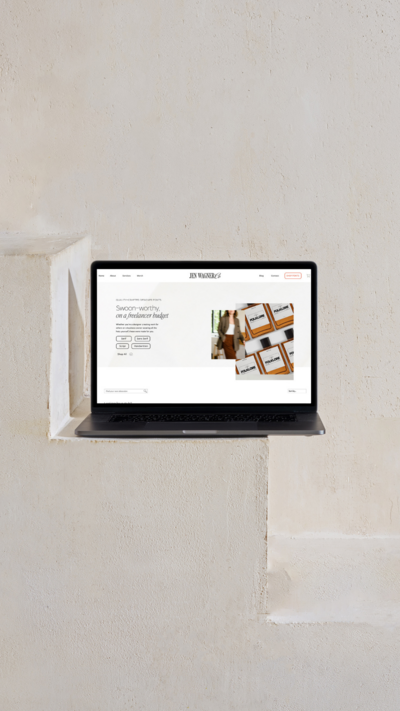
Jen Wagner Co
Shopify to showit with Woocommerce shop Migration
TIQUE
Custom Brand + Showit Website + Shop

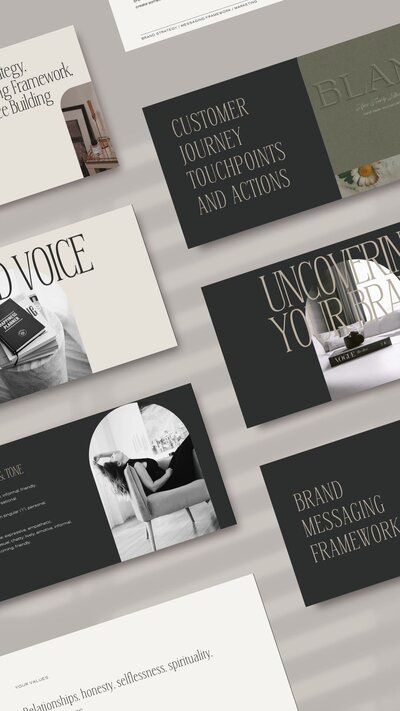
Blanc Salváge
Brand Strategy + showit Shop Design + Copywriting
Revitalized Health & Wellness Counseling
Custom Brand + Website

Wordfetti + Wordshop
showit Website + shop Design & Development

Editorial Stock Images
showit shop + Multi-level Membership


Amy Posner
Brand Strategy + Custom Brand + Showit Website

Our clients lead their industry.

Hi I’m Ingrid
I design strategy-led brands and Showit websites that confidently represent you.
I’m a designer with a magic touch for monetizing websites. I’m also a tea-lover, dog momma, Ravenclaw, INFP and 2w3 (for all you personality-test nerds like me).
I’ve also been called a Showit website expert (been with them since 2013), and a sucker for understanding customer journeys, brand psychology, and consumer and sales psychology. My clients have some pretty cool results after working together, things like doubled shop conversions, booked-out services in weeks, and increased monthly revenue, among other cheer-worthy celebrations.